Otto Friedrich · 2 September 2026
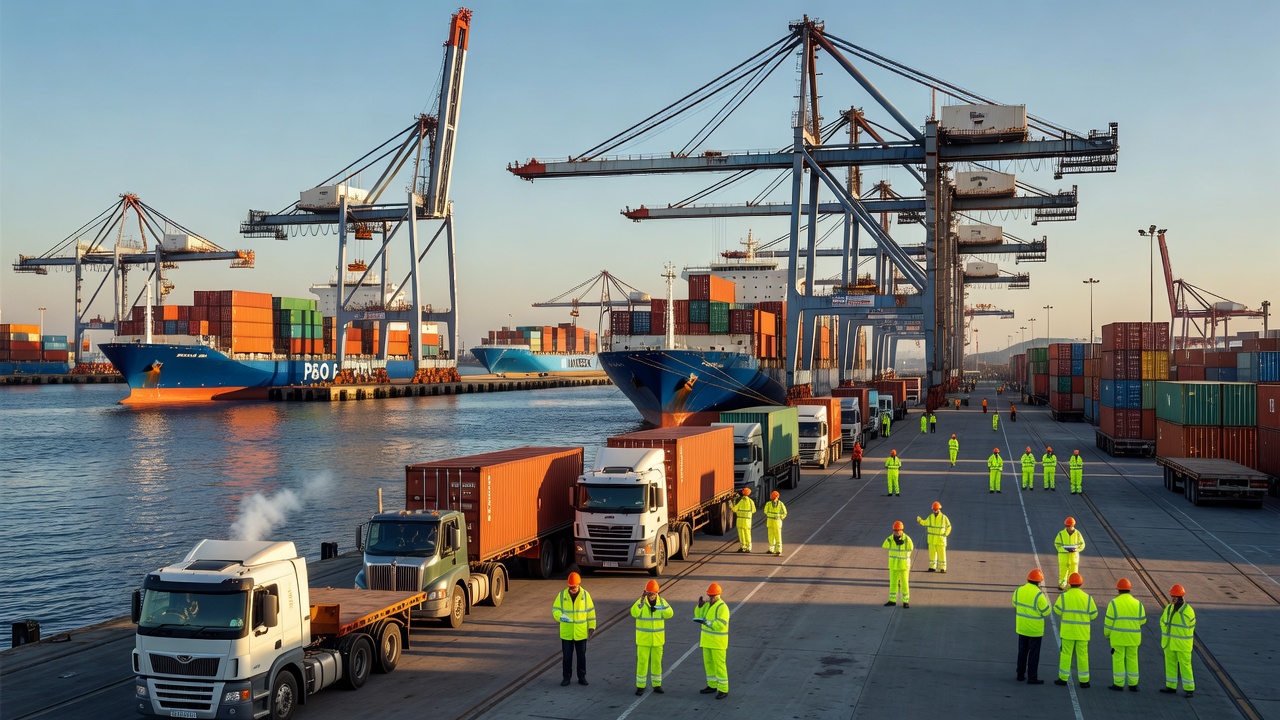
UK ports have reported record cargo volumes amid ongoing global trade shifts driven by geopolitical tensions and supply chain realignments. The British Ports Association recorded a total throughput of 525 million tonnes over the past year, surpassing previous benchmarks by 8 percent. This growth stems from increased non-EU trade, rerouting of vessels around the Red Sea, and rising demand for consumer goods and energy commodities. Major operators have invested in automation to manage the influx efficiently while maintaining competitive turnaround times.
Leading Ports Drive Volume Surge
The Port of Felixstowe handled 4.9 million TEUs, reflecting a 13 percent year-on-year increase fueled by expanded Asian trade lanes. Southampton saw vehicle imports climb 16 percent, largely from electric vehicle shipments originating in China and South Korea. Immingham reported strong gains in bulk cargoes including biomass and minerals, supported by upgraded rail connections. Liverpool and Tilbury also posted double-digit growth in container and project cargo segments. These results demonstrate the strategic importance of UK facilities as shipping lines diversify away from traditional routes.
Broader Economic and Future Outlook
The surge has generated over 12,000 direct jobs in logistics, warehousing and maintenance across coastal regions. Government infrastructure funding aims to address capacity bottlenecks and incorporate greener technologies such as shore power. Trade analysts forecast sustained high volumes through next year provided global demand remains resilient and environmental regulations are met. UK ports continue to strengthen their position within evolving international commerce networks despite ongoing challenges around vessel size limits and decarbonisation targets.